Introduction: Beyond the Membrane Keyboard
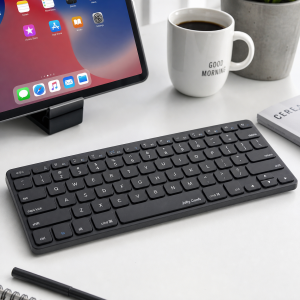
For the average computer user, a keyboard is merely an afterthought—a flat, plastic peripheral bundled with their desktop computer or built directly into their laptop. However, for professionals who spend hours typing, such as software engineers, writers, data analysts, and gaming enthusiasts, the keyboard is the primary interface through which they interact with the digital world. Over the past few years, mechanical keyboards have transitioned from a niche hobbyist subculture into a mainstream productivity phenomenon. Offering superior tactile feedback, exceptional durability, acoustic satisfaction, and endless customization options, a high-quality mechanical keyboard can completely transform your daily workflow. This comprehensive guide unpacks the mechanics behind these devices, explores layout variations, and guides you toward finding your perfect typing instrument. Mechanical Keyboards Explained
Anatomy of a Mechanical Keyboard: Understanding the Switch Mechanical Keyboards Explained
The fundamental component that separates a mechanical keyboard from a standard rubber-dome membrane keyboard is the individual mechanical switch located beneath every single keycap. On a membrane keyboard, typing requires pressing a key all the way down to compress a rubber sheet and complete an electrical circuit. This layout often feels mushy and causes finger fatigue. In contrast, mechanical switches utilize physical plastic stems, metal leaf springs, and high-quality coils to actuate keys cleanly, often halfway through the keypress distance. Mechanical Keyboards Explained
Mechanical switches are broadly categorized into three distinct families based on their tactile feel and acoustic profile: Mechanical Keyboards Explained
1. Linear Switches (The Smooth Typer) Mechanical Keyboards Explained
Linear switches provide a completely smooth, uninterrupted keystroke from the top of the press all the way down to the bottom. There is no physical bump or audible click when the switch actuates. These are highly favored by gamers because the smooth motion allows for rapid, repetitive key presses without resistance. Popular examples include Cherry MX Red and Gateron Yellow switches. Mechanical Keyboards Explained
2. Tactile Switches (The Typist’s Choice) Mechanical Keyboards Explained
Tactile switches feature a noticeable, physical bump right at the point of actuation. This feedback informs your fingers that the keypress has been registered without needing to bottom out the key completely. This creates an efficient, responsive typing cadence that is perfect for programmers and writers. Popular examples include Cherry MX Brown, Durock T1, and Boba U4T switches. Mechanical Keyboards Explained
3. Clicky Switches (The Acoustic Traditionalist) Mechanical Keyboards Explained
Clicky switches offer both a physical tactile bump and a sharp, audible ‘click’ sound upon actuation, reminiscent of vintage typewriters. While highly satisfying for solitary writers who enjoy strong auditory feedback, clicky switches (like Cherry MX Blue) can be extremely disruptive in shared office environments or during voice calls. Mechanical Keyboards Explained
Key Layouts and Form Factors: Optimizing Desk Space Mechanical Keyboards Explained
Mechanical keyboards come in a wide variety of sizes, or form factors, designated by a percentage relative to a traditional full-sized keyboard: Mechanical Keyboards Explained
– Full-Sized (100%): Contains all keys, including the alphanumeric cluster, function row, navigation cluster, and a dedicated numeric keypad (numpad). Ideal for accountants and data entry specialists, but takes up a massive amount of desk space.
– Tenkeyless (80% / TKL): Eliminates the numeric keypad entirely. This allows you to position your mouse closer to your center of mass, improving ergonomics and reducing shoulder strain while keeping the function row and arrow keys intact.
– 75% Layout: A more compact version of the TKL layout that compresses the keys together, eliminating empty space while retaining the function row and dedicated arrow keys. It is widely considered the sweet spot for productivity and portability.
– 65% Layout: Removes the top function row entirely (functions are accessed via key combinations), but retains the dedicated arrow keys and a few navigation keys. Highly popular among software developers.
– 60% Layout: The ultra-compact minimalist standard. It strips away everything except the core alphanumeric block. It is highly portable and looks clean on minimalist desks, but requires memorizing multiple function layers to access arrow keys or media controls.
Keycap Materials and Profiles: The Touch Experience
The part of the keyboard your fingers contact directly is the keycap. Material composition heavily influences both the durability and the acoustic profile of your keyboard. The two primary plastics used are:
– ABS (Acrylonitrile Butadiene Styrene): A cheaper, lighter plastic. Over time, ABS keycaps tend to develop a smooth, oily ‘shine’ due to finger friction, and their legends can wear away if they are cheaply printed.
– PBT (Polybutylene Terephthalate): A much denser, more premium polymer. PBT keycaps feature a matte, textured finish that resists finger oils and shine over years of heavy use. Legends created using a ‘Double-shot’ manufacturing process will never fade because they are molded from two separate pieces of plastic.
Furthermore, keycaps come in different geometric shapes, known as profiles. OEM and Cherry profiles feature sculpted rows that tilt gently to mirror the natural reach of your fingers. In contrast, flat profiles like XDA or DSA feature uniform heights across all rows, offering a sleek look but requiring an adaptation period for touch typists.
The Customization Phenomenon: Hot-Swappable Boards and Acoustics
Modern mechanical keyboards often include ‘Hot-Swappable’ printed circuit boards (PCBs). Historically, changing switches required disassembling the device and using a soldering iron to melt electrical connections. Hot-swappable boards allow users to pull switches out and plug new ones in within seconds, requiring no technical expertise. This design lets you experiment with different switch types easily until you find your preferred setup.
Acoustic tuning has also become an art form. Keyboard enthusiasts utilize sound-dampening foams (poron or silicone) inside the case to absorb hollow echoes, apply specialized lubricants (like Krytox 205g0) to switch stems and stabilizers to eliminate scratchiness and rattle, and choose case materials (such as heavy CNC-milled aluminum or polycarbonate) to alter the tone of the typing sound from a high-pitched ‘clack’ to a deep, muted ‘thock’.
Conclusion: Finding Your Perfect Typing Instrument
Investing in a mechanical keyboard is ultimately an investment in your daily comfort, health, and professional efficiency. Whether you opt for a pre-built hot-swappable 75% keyboard with tactile switches for a quiet office, or a heavy aluminum 65% linear board for smooth gaming sessions, the upgrade over a standard mushy membrane keyboard is profound. By taking the time to understand your preferred switch dynamics, form factor needs, and acoustic preferences, you can assemble a personalized input tool that makes every single keystroke a highly satisfying, ergonomic experience.
